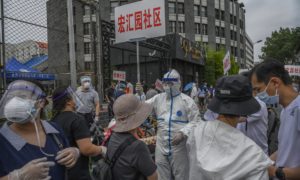
Beijing, June 15: More than 100 cases of Covid-19 have been officially recorded in the fresh outbreak in Beijing, the World Health Organization has said.
As lockdown restrictions ease and countries in Europe lifted their borders, the WHO warned countries to stay on alert for a possible resurgence of Covid-19 infections.
The UN health agency said it understood no new deaths have been reported thus far in the Chinese capital but added that given Beijing’s size and connectivity, the outbreak was a cause for concern.
WHO director general Dr Tedros Adhanom Ghebreyesus told a virtual press conference:
Even in countries that have demonstrated the ability to suppress transmission, countries must stay alert to the possibility of resurgence.
Last week, China reported a new cluster of cases in Beijing, after more than 50 days without a case in that city. More than 100 cases have now been confirmed.
The origin and extent of the outbreak are being investigated.
Maria Van Kerkhove, the WHO’s Covid-19 technical lead, told the news conference: “My understanding is that there are no deaths associated so far” with the Beijing outbreak.
WHO emergencies director Dr Mike Ryan said that countries which have implemented an immediate and comprehensive spread of measures have generally been able to contain new clusters.
“However, Beijing is a large city and a very dynamic and connected city, so there is always a concern,” he said.
“And I think you can see that level of concern in the response of the Chinese authorities, so we are tracking that very closely.”
He said the WHO had offered assistance and support to the Chinese authorities leading the probe, and may reinforce its own team in Beijing in the coming days as the investigation grows. He added:
A cluster like this is a concern and it needs to be investigated and controlled – and that is exactly what the Chinese authorities are doing.
Nearly 75% of recent cases come from 10 countries, Tedros said, mostly in the Americas and South Asia.
However, there were increasing numbers of cases in Africa, eastern Europe, central Asia and the Middle East, he added.
– The Guardian