By Sanjay Prasad Paudel
Animal Farm, a novel written by George Orwell, contains seven commandments, which are still relevant in the current social and political milieu of Nepal. It has a famous satirical line: “All animal are equal but some animals are more equal than others.” Though the saying is intended to mock the communist regimes, it applies to all conditions where the political chicaneries rule the roost. The COVID-19 pandemic has exposed the country’s health system, economy and unequal social structure. During the lockdown imposed to slow down the virus’s spread, majority people have been left high and dry but a handful of them in upper hierarchy enjoy the privilege given by the government. For example, vehicle passes are provided mostly to high-level politicians and bureaucrats but the commoners having no access to private vehicles and passes have been left out in cold.
Orwellian accuracy
Moreover, I wonder how Orwell correctly imagined the psychology and nature of leaders who showed the dream to their cadres and people to revolt against the regime and autocracy. In short span of the time, the very revolutionary leaders become more autocratic than the previous ones. Hence, the saying- some animals are more equal than others.
In Nepal, communist leaders introduced Marxism to change society fundamentally but the question arises whether they have succeeded to eradicate poverty and exploitation from society or they changed themselves by ditching the professed principles and looting the state’s coffers and privileges.
On the other hand, many leaders and cadres do hard works according to the principle of communism but soon they fail to continue to live up to their commitment.
Similarly, some leaders do not possess communist character, they act like a feudal boss. In course of their struggle, they ultimately feel that geopolitical conditions do not allow them to transform Nepali society smoothly which they had dreamt long ago. So they deviate themselves from their path and compromise their principle to gain power and perks. Furthermore, in the communist history a few leaders were supposed to be much progressive but they are surrounded by what Dor Bahadur Bista calls Afno manchhe, (cronies), which include the relatives, sycophants and factional groups. Another tragic part is that communist leaders transform themselves into elite class against which they had struggled and revolted. These sorts of example are galore in Greek tragedies. Another reason of their failure is that they are easily trapped by bureaucrats who always curry favour for their personal benefits. Communist ministers are not so smart to know the shoddy plan of bureaucracy when they are told to approve projects based on flimsy ground.
However, Manamohan Adhikari-led government (2051-52 B.S.) is an exception. But it collapsed before completing its full term. It has, for the first time, unveiled the people-oriented programs – allowance to the senior citizens and separate development fund to the VDCs and municipalities. Late Adhikari was the first PM to propose amending the 1950 Peace and Friendship Treaty with India. The domestic and foreign elements have played negative role in creating instability inside the country.
I am always in dilemma – whether the communist leaders really commit to their ideals or they just pretend in doing so from the very beginning.
We ourselves experience the Greek tragedy in various moments of life. The Greek tragedy, however, is very dangerous and the cruelest among other tragedies. In it, the heroes always suffer the worst outcomes of their own action which they often try to avoid it. Smelling the impending downfall, they attempt as hard as possible to escape the misfortune. Quite the contrary, they are easily trapped into the vicious circle by their own fate that they do not know. They are still happily performing the karma against the misfortune. This very happiness leads them to the hell.
In my opinion, the Nepali people are like the Greek heroes. They struggle throughout their life but at the end of the day they have disastrous results like the protagonists of the Greek tragedy. In 2007 B.S., they wanted to chart their own destiny by overthrowing the end of 104-year-long repressive Rana regime. But one decade later another tragedy befell them – democracy was hijacked and autocracy imposed in its place. For next 30 years, they fought against the Panchayat system but euphoria over the restoration of multiparty democracy in 2046 B.S. appeared to be a short-lived phenomenon. Chronic political instability fuelled by the ruthless Maoist insurgency roiled the nation for a decade. Then came Janaanadolan –II in 2062/63 B.S but the Madhes movement triggered another round of uncertainty. The promulgation of new constitution in 2072 B.S. followed the economic blockade by India.
The constitution has institutionalized the three-tier federal system but it roused wrath from the public owing to its policy of collecting hefty tax on various pretexts. Nepalis always wanted the political freedom and freedom of the press, and to get rid of the vicious circle of poverty. To end their abject penury, they have been forced to work in Gulf nations in adverse and dangerous climatic conditions. Are they being punished for revolting against the Panchayat and autocratic monarch?
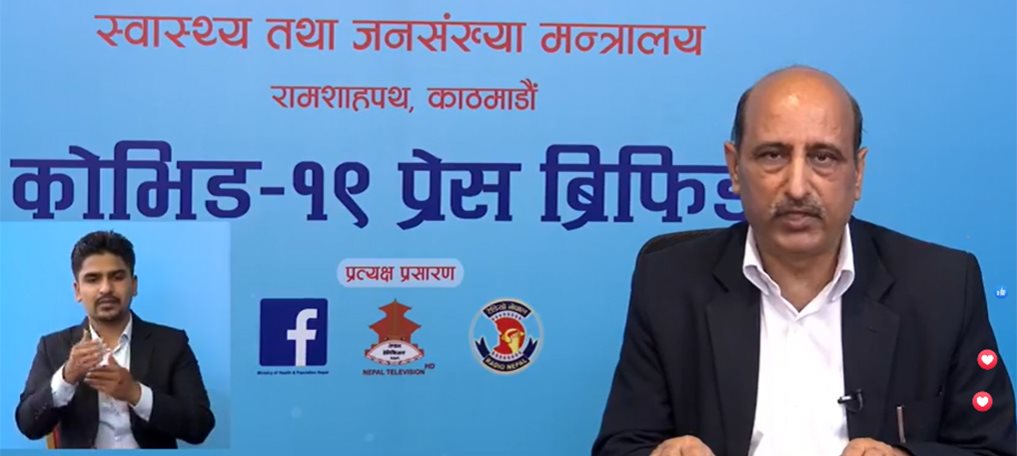
Past rulers often stood against the voice of people. A handful of leaders from ruling party, bureaucrats, technocrats, and elites always abused the state’s authority and resources. During the COVID-19 pandemic, the government seems less supportive with the people’s problem. It is accused of being involved in corruption cases while buying the PCR and RDT testing kits from China. The ongoing conflicts among the center, province, and local government also smell a rat. Power tussle among the top guns of ruling Nepal Communist Party such as PM and chair KP Sharma Oli, co-chair Pushpa Kamal Dahal Prachanda , Madhav Kumar Nepal, Jhalanath Khanal and Bamdev Gautam has threatened the political stability. They have drawn flak from the public for ignoring the burning problems in the midst of pandemic.
At the moment, Nepalis have been struggling on the multiple fronts which remind us of the nature of Greek tragedy. Nepal has been entangled into scores of conflicts and challenges – (a) pandemic and ensuing economic downturn (b) raging intra-party conflict in NCP (c) map dispute with India as well as its reluctant to accept EPG report (d) differences over the MCC grant of the US (g) new citizenship provision related to foreign women married to Nepalis.
Eternal sufferings
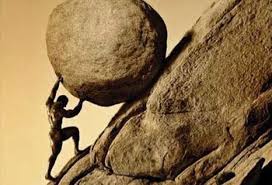
Now the myth of Sisyphus aptly applies to Nepalese politics. In the Greek story, Sisyphus, a mythical character, was cursed to roll a huge stone up the mountain only for it to roll down every time it neared the top. He repeats this action for perpetuity. Nepali people rolled up political stone many times, for example, in 2007 B.S., 2036 B.S., 2046 B.S, and 2062/63 B.S. Finally, they had also got an inclusive federal democratic charter in 2072 B.S. They also participated in elections so that the country would take a predictable course and usher in an era of prosperity, peace and happiness. But, like Sisyphus, they have been condemned to eternal suffering largely owing to the myopic and selfish leaders.