P Kharel
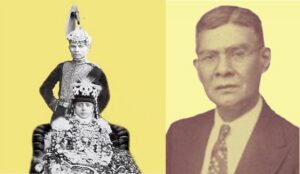
If words of mention have any merit, Raja Jai Prithvi Bahadur Singh is perhaps the most underestimated figure among Nepal’s men of letters, social service and ideas. In the first quarter of the 20th century, he was the ruler of the tiny principality of Bajhang in far western Nepal. A visionary well ahead of his time, motivated as he was by a desire to change the approach and attitude toward humankind in general and the downtrodden in particular, the one-time head of Gorkhapatra newspaper institution, the only first and only newspaper for a half century, ranks as the first modern Nepali philosopher of international prominence.
At the peak of his scholarly outings, his was a prominent presence in the lecture circuits of British India and European cities in the 1920s. His lecture tours covered various European countries, including Britain (London), France (Paris), Romania (Bucharest), Austria (Vienna), Poland (Warsaw), Yugoslavia (Belgrade), Geneva (Switzerland), Berlin (Germany) and Prague (Czechoslovakia). In this connection, he also visited American cities, including Chicago, where he delivered a lecture on his favourite subject.
Singh, who opened schools in Kathmandu and in his Bajhang principality, wrote textbooks, including the first Nepali grammar book. He also did much for social reforms in his home state in particular.
By the time Singh’s “Humanism”, a three-volume work, was published in 1928, the son-in-law of Rana Prime Minister Chandra Shumsher was deep into propagating the philosophy of humanism. He narrates in the foreword, “Class hatred, racial jealousies, communal quarrels, family disputes and a host of others which divide man from man began to impress me more as I grew older…My studies of them together with my own thinking of the problem have brought me certain views which, in 1913, I published in a booklet in my own language, Nepalese.”
Singh shines
Coming as the reprint does in 2019 after its 1928 debut, the author’s tribute, “dedicated with humble hearts to lovers of peace and saintly minds that toil for man’s emancipation”, tells it all in a nutshell. His quest for a larger readership for deliberations led him to rewrite, expand and explain at grater length and detail his philosophy into three volumes in English. His comments, emanating from conviction, constitute a manifestation in honesty and search for truth.
Living in India most of the time after he left Nepal on realising that he could not get along well with his father-in-law Chandra Shumsher who ruled with an iron fist, Singh attended and addressed many meetings and conferences in different cities of India and Europe. Discreet in choice of words but forthright enough to put his views across without ambiguity, he was many things to many people: Ruler, educationist, social reformer, grammarian, author, traveller, editor, humanist and much more.
Born in that remote principality of Bajhang and educated in the neighbourhood during British India, Singh emerges as an exponent of humanistic outlook that calls for fraternity and welfare of all without any exception. Education, to him, “is the cultivation of the mind through external aids…The culture is the consequence of experience”.
Nepal’s proven pioneer philosopher of humanism is against running roughshod over traditions and customs, provided they serve the well-being of all. “Orders of ex-communication from the Religious Head or the Judgments of the Elders of the Village from their Assembly-Hall were in the days of yore as powerful as the Statutory Enactments passed in regular manner by modern Parliaments.” With such ideas he set out to share them in the international circuit.
On the belief in God, Singh asserts, “Under the dispensation of a universal divinity on whose providence he is made to depend much for his living as for his birth, he loses all freedom to think and to act for himself…He becomes a pitiable being.” He dwells upon the task of modern democracies concerning the issue of unrepresented or ill represented and intrinsically weak minorities “that desire popular, representative and responsible” governance.
Citing the “suppression of the weaker by the stronger” as “the chief source of trouble to the modern man”, he fervently championed the cause of women, “They may not possess as such physical strength, but in all moments which require the subordination of the body to the mind, they equal men and excel in them.”
Singh’s quest for answers follows an analytical mind observing that “the common aim of all the social sanctions is to create an inter-dependent relation along several individuals, so that each by his labours may contribute to the welfare of all, and, as each lives and prospers, others may also live and prosper without fear of intervention from intruders”. Misery being of humankind’s own making, Singh terms the mind “a protracted course of self-correction” that steers the course of life leading to humanism, “which is higher humanity akin to divinity itself”.
Ignorance bodes ill
Attributing the cause of all miseries to ignorance, he concludes, “Truth is the only morality – all else is sin.” He shows dissatisfaction with the class system of the Christian world and the caste system of Hindu society.
Singh’s thoughts, spread over 550-plus pages, could not have found favour with the brutally authoritarian Rana rulers of Nepal. At best he would have been confined to Kathmandu or restricted in travel – far away from stimulating opportunities and platforms to share his thoughts with larger audiences. By the time he died in 1940, Nepal’s dawn of democracy was still a full decade away. Singh obviously despaired over the suffocating political climate at home.
The Nepali philosopher puts India at the centre of his philosophy. In fact, in a two-volume compilation of his lectures and addresses at various European and Indian cities in the 1920s, too, he inexplicably overlooks Nepal, the home of Vyas who composed some of the major scripts of Hindu literature.
Except for a bust perched on a modest marble column at the foreground of Gorkhapatra Sansthan’s premises in Kathmandu, Singh is hardly mentioned in any of the literally thousands of speeches, talk programmes and what have you, today. The rank indifference meted out to the philosopher who travelled far and wide to rub shoulders with his foreign counterparts in privileged discourses.
Had the international philosopher belonged to the political family of those at the helm of the state affairs after his death in 1940, rich tributes might have been regularly paid to that cosmopolitan philosopher of considerable sophistication and an all-embracing outlook focused on humanity and collective welfare taking precedence over individuality.
(Professor Kharel specialises in political communication.)
– The Rising Nepal